
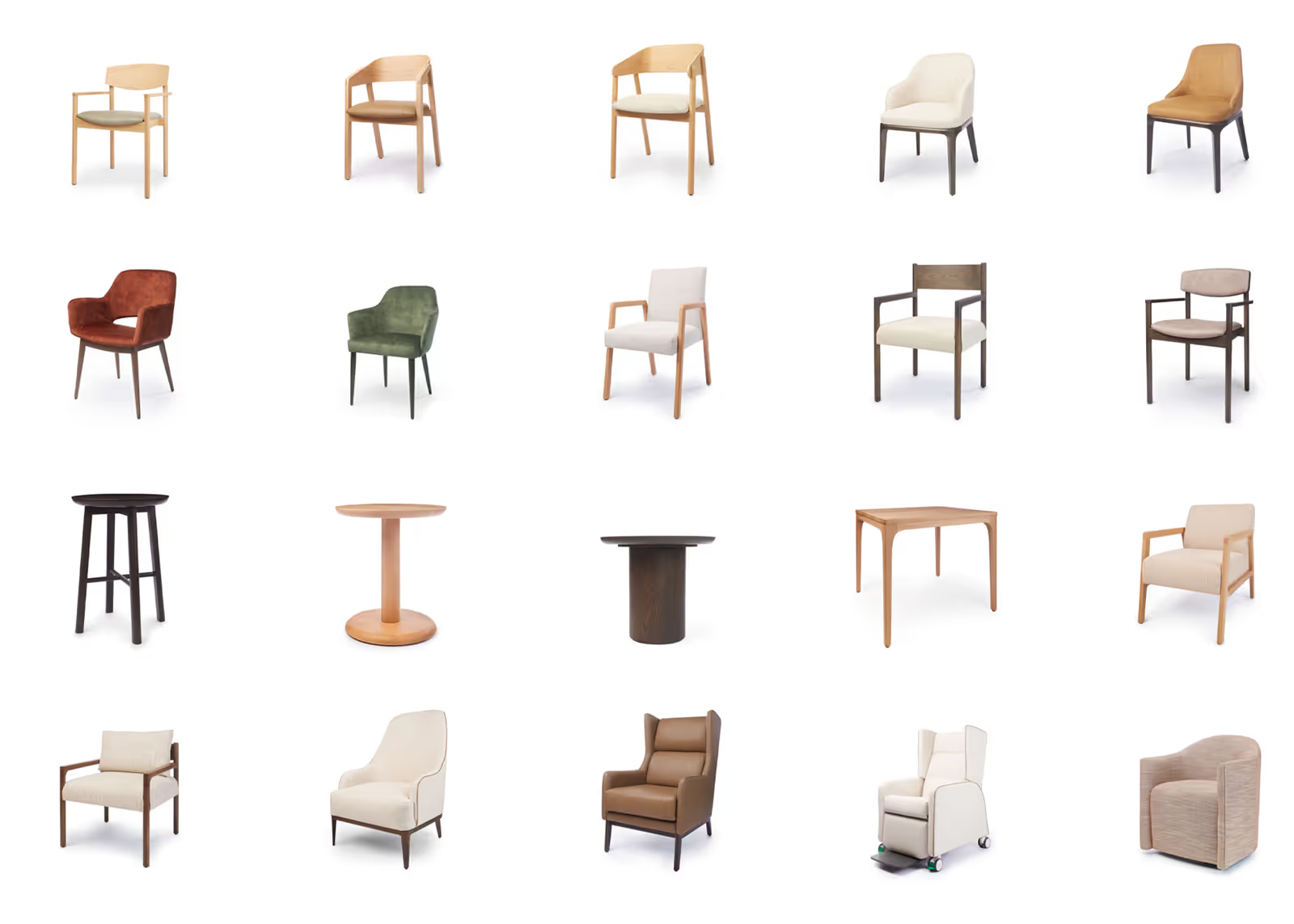
What I've learned working with established Auckland brands
There's a point most growing businesses hit where the photography stops keeping up. It's not always obvious at first. Sales are coming in, the brand is developing, and the DIY shots or early-budget images are doing a passable job. Then something shifts. A wholesale buyer doesn't call back. The website gets a refresh but the product images make it look dated again. A new marketing hire flags it in their first week.
I can usually tell within the first few minutes of a consultation whether a business is at that point. Budget matters, but it's not the main thing. What I'm looking for is whether the products are proven, the brand has direction, and the photography is the weak link holding everything else back. That's the situation I work best with.
The pattern I see most often
You launched with whatever you could manage. DIY shots, a favour from someone with a decent camera, a quick studio hire that didn't quite deliver. It was fine. It worked. You made sales.
But the business has moved on and the photography hasn't. Your brand positioning has sharpened. Your customers have higher expectations. And those images that were acceptable a few years ago are now actively costing you, in lost wholesale opportunities, in conversion rates that won't budge, in the time your team spends trying to make old assets work for new campaigns.
The question at that stage isn't whether you need better photography. It's what it's costing you to wait.
What actually changes
When established brands do a proper photography refresh, the results follow a predictable pattern. Wholesale buyers take the pitch deck more seriously. Ecommerce conversion rates improve because customers can actually see what makes the product worth buying. The marketing team stops spending hours trying to salvage unusable files.
The products haven't changed. The perceived value has. That's what consistent lighting, accurate colour, and cohesive styling do for a brand that's already built something worth showing.
When businesses usually make the move
Most clients come to me at a specific moment: a retail expansion, a rebrand, a new product line, a website rebuild, or a new hire who makes the case internally. If any of those apply, you're probably ready.
Established brands are also, genuinely, easier to work with. You know your products, you know which features matter, you know your customer. We're not figuring out your visual identity from scratch. The process moves faster and the results are sharper for it.
How it works
If you just need e-commerce it's easy; use the quote finder function on my contact page, tell me what you need get your estimate and send it over to me for approval - right inside the form. For anything else you can e-mail me directly or fill in the project brief if you aren't sure what to tell me or what you need. For both methods, ill get back to you within 24 hours. If the scope needs more detail I'll follow up with questions or put together a Milla board for planning. Once we've locked in the shot list, styling direction, and logistics.
What it costs
A comprehensive product photography refresh typically sits between $2,000 and $8,000+GST, depending on product volume, whether you need lifestyle content alongside clean product imagery, and styling complexity. For most businesses, it pays for itself through stronger conversion rates and wholesale opportunities well within the first six months.
Why working with an Auckland-based photographer matters
I'm based in Royal Oak. For NZ brands, that means fast turnarounds, straightforward logistics, and someone who understands the local market. Over time I learn your brand, and each subsequent shoot becomes quicker and more efficient because the groundwork is already done.
Are you ready to move?
If you can answer these without having to think too hard, you probably are.
If you're running an established business and the photography is the last thing that hasn't caught up, get in touch. Send me your website or Instagram, a brief outline of what you need, and your timeline. I'll take it from there.