
I have invested in my business to help yours grow!
Moving on from a camera you've shot with for years isn't a decision you make lightly. The Canon and I had a good run, but having the right tool for the job is what actually moves the needle on the work, and it was time.
I recently upgraded to the Sony A7R V as my primary camera for both ecommerce and creative product shoots. If you're not across the specs, the short version is that it shoots at 61 megapixels with a level of detail and dynamic range that makes a genuine difference when your subjects are products that need to be seen clearly. Fine textures, subtle surface finishes, embossed packaging, delicate fabric weave; these are the things that separate a photograph that sells from one that merely documents. Resolution at this level means those details are captured rather than approximated, and the file has the latitude to be cropped, retouched, and output across multiple formats without any loss of quality.
For ecommerce work specifically, sharpness and colour accuracy aren't optional extras. A customer deciding whether to buy a product based on an image needs to trust what they're seeing. The A7R V's colour science is excellent and the autofocus system handles reflective surfaces and complex textures without the hunting and inconsistency that can slow down a high-volume shoot. For creative work, the resolution gives more freedom in post: tighter crops, larger print outputs, and finer control over the retouch without the file falling apart.
Alongside the camera body, I've invested in new light modifiers, lenses, and a range of accessories that don't make for glamorous reading but make a real difference to how efficiently and consistently content gets delivered.
Equipment investment is something I take seriously because the output is what clients are paying for. . Higher resolution files mean more flexibility for how and where the imagery gets used. It all feeds back into the same thing: photography that earns its place in a brand's marketing rather than just filling a content gap.
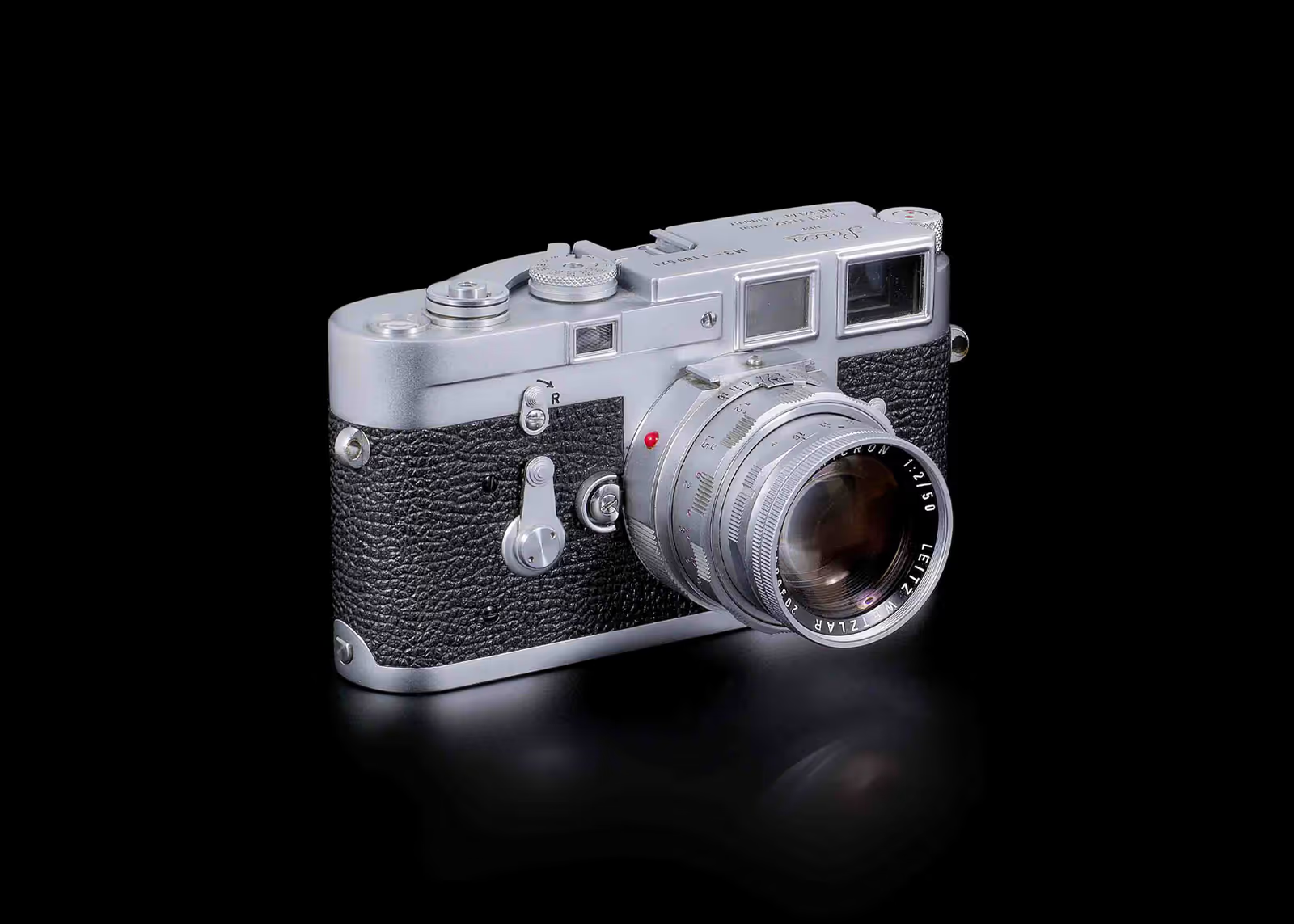
The Leica up top, for what it's worth, was sadly never mine. But it was one of the first products I ever photographed professionally at the very start of my commercial career, and it has never looked anything other than exceptional in front of a lens. Some things photograph well regardless of who's behind the camera. Most things, though, need a bit of help.