
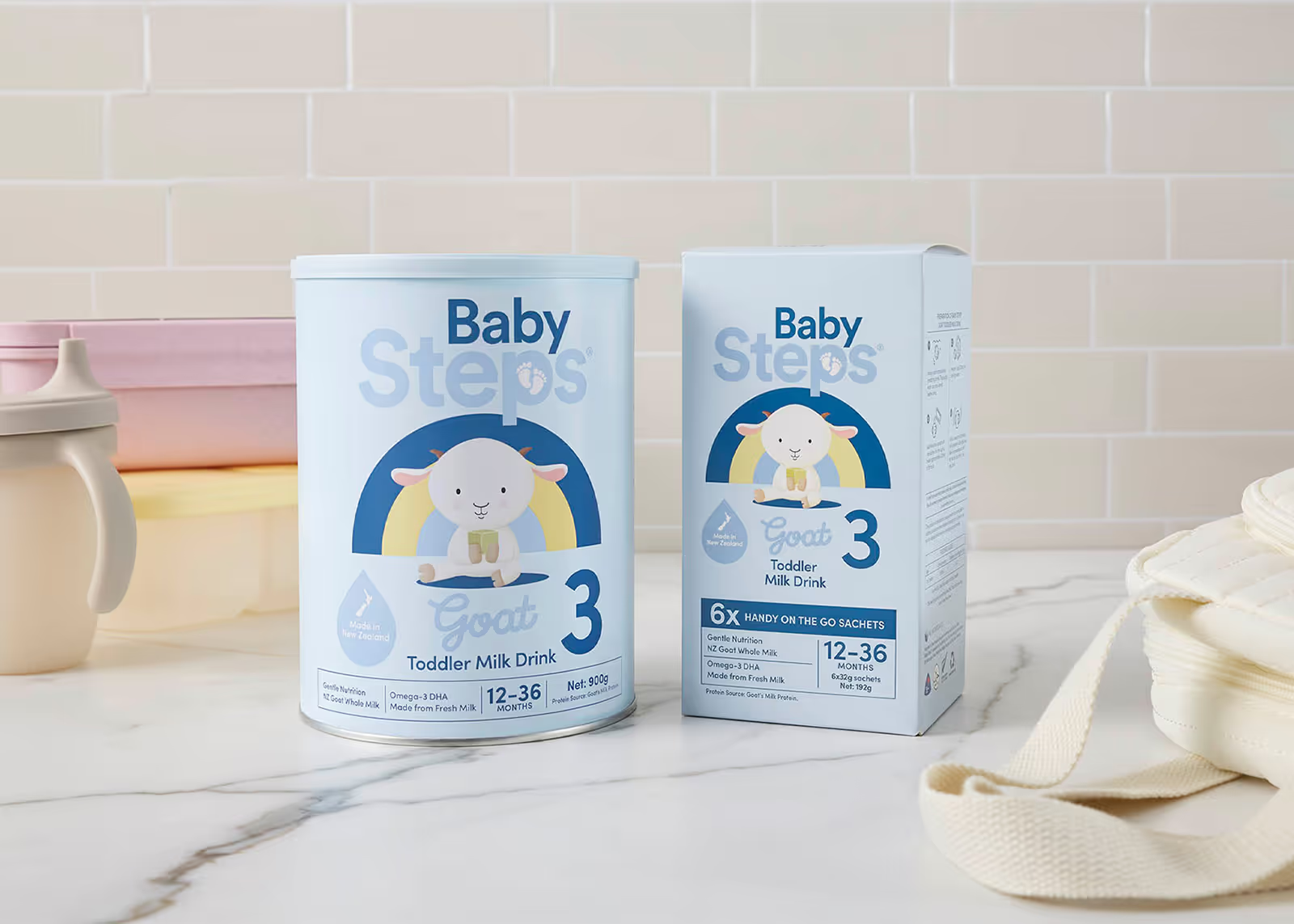
Online shoppers can't pick up your product, feel the weight of it, or hold it up to the light. Every purchasing decision they make is based entirely on what they see on screen. That puts product photography at the centre of your sales operation, not as a marketing extra, but as the thing that either earns or loses the sale.
Working with NZ brands in Auckland, I see this directly. Investing in quality imagery consistently produces better conversion rates, fewer returns, and stronger brand perception. Here's why it works, and what to think about when briefing a product photographer.
Your images are doing the selling
In a physical retail environment, a customer can examine a product, test the quality, and make an informed decision. Online, none of that is available. Your images have to do all of it: communicate quality, scale, texture, colour, and context in a handful of photographs.
When imagery is poor, poorly lit, inconsistently styled, or low resolution, shoppers hesitate. That hesitation usually ends with them leaving. When imagery is clear, consistent, and professionally executed, shoppers feel confident enough to buy. Clear-cut product photography that accurately represents what arrives also reduces returns, because customers receive exactly what they expected.
The shots that actually convert
Not all product images serve the same purpose. A strong ecommerce set typically combines several types, each answering a different question the shopper has before committing.
The hero image is what appears in category pages and search results. It needs to communicate clearly what the product is at a glance, clean background, well-lit, centred. For clothing this is usually a ghost mannequin or on-model front shot. For beauty and skincare, a clean packshot.
Multiple angles answer the questions shoppers have before they scroll away. Front, back, side, and close-up detail. Shoppers who look through several images convert at a significantly higher rate than those who see only one.
Detail shots demonstrate quality in a way broad images can't. Texture, stitching, packaging construction, a zip detail, a label. For premium products especially, these shots do the work of justifying the price point.
Lifestyle images show the product in context and are the most powerful format for social media and email campaigns. A skincare product on a styled bathroom shelf. A homeware piece on a well-lit dining table. These help the shopper place the product in their own life, which is where the emotional side of purchasing happens.
Styled flatlays are particularly effective for fashion, beauty, and lifestyle brands wanting to communicate aesthetic alongside product. The prop sourcing and creative direction in a flatlay reinforces brand personality in a way a straight packshot can't.
DIY vs professional photography: an honest take
I get asked this regularly. For a product launch, a wholesale pitch, or hero campaign imagery, professional photography is almost always worth the investment. For quick social content or behind-the-scenes moments, DIY works fine.
The issue with DIY product photography isn't usually the camera. Modern smartphones shoot beautifully. It's the consistency of lighting, colour accuracy, the time investment per product, and the post-production. For a brand running 50 SKUs across multiple colourways, producing consistent high-quality imagery at home is genuinely difficult and time-consuming.
Professional photography solves the consistency problem. When every image in your catalogue shares the same lighting, background tone, and styling approach, your store looks polished and trustworthy. That consistency is worth as much as any single image's technical quality.
What makes it work for your brand specifically
Good product photography isn't one-size-fits-all. A beauty brand needs different imagery to an activewear label. A handmade homewares business requires a different approach to a technical skincare line. The most effective shoots are collaborative, where I understand your brand aesthetic, your target customer, and the platforms you're primarily selling on.
I specialise in ecommerce, ghost mannequin photography, fashion flatlays, lifestyle imagery, and stop motion reels across fashion and apparel, beauty and skincare, homewares, and lifestyle products. I work with brands at every stage, from new product launches through to full seasonal catalogue refreshes, and I put as much thought into prop sourcing and set building as I do into the photography itself.
Common questions
How many images do I need per product? At minimum, three: a clean hero shot, at least one alternate angle, and one lifestyle or in-context image. For clothing, add front, back, and a detail shot. For beauty and skincare, a packshot plus one or two lifestyle images is typically sufficient.
What background works best for ecommerce? For primary listing images on Shopify or marketplaces, white or off-white is the safest option: clean, distraction-free, and consistent with marketplace standards. Lifestyle and styled images can use textured surfaces, coloured backgrounds, or full-scene sets.
Is retouching included? Yes. All images include professional retouching as standard: colour correction, exposure adjustment, and clean-up. Ghost mannequin compositing and background removal are available as part of the package or as standalone retouching services.
What's the minimum order amount? for ecommerce my lowest image count for orders is six. These should all be in the same lighting set up, for example all flat-lay or all table-top.
Can you photograph small products like jewellery or cosmetics? Yes. Small products require a different lighting approach and often macro techniques to capture texture and detail properly. They're some of my favourite shoots.